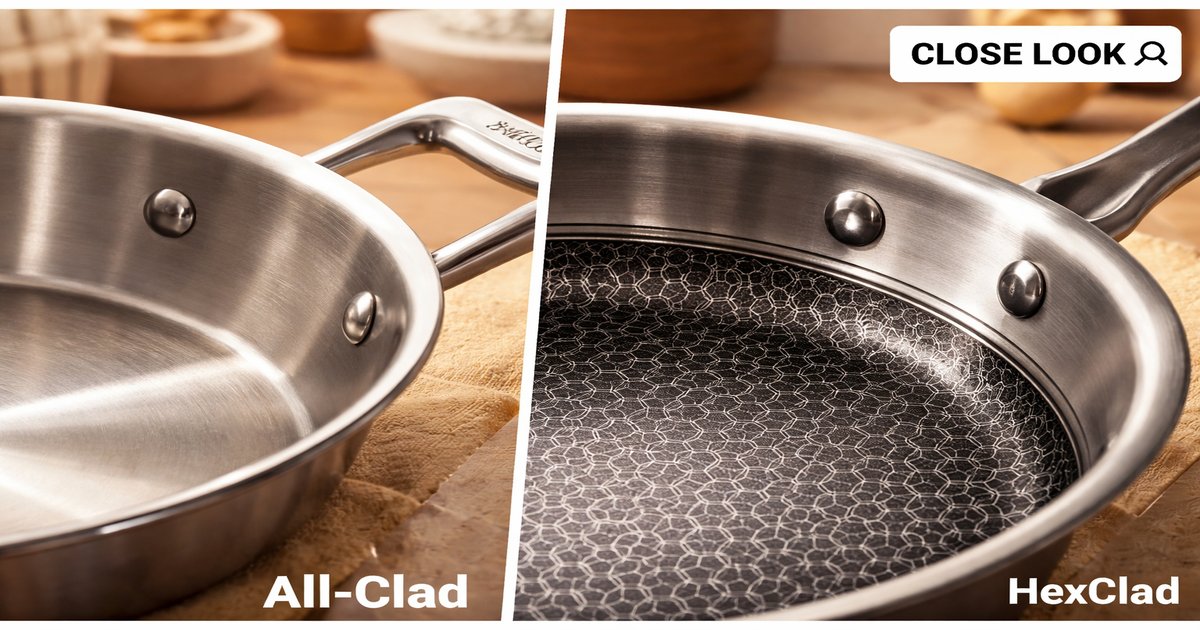
You’re in the kitchen, ready to whip up a culinary masterpiece, but you’re stuck choosing between All Clad and HexClad cookware. Both brands promise professional-grade results, but which one will truly elevate your cooking game?
| Specification | All Clad | HexClad |
|---|---|---|
| Material | Stainless Steel | Hybrid (Stainless Steel & Non-Stick) |
| Non-Stick | ✗ | ✓ |
| Induction Compatible | ✓ | ✓ |
| Oven Safe Temperature | Up to 600°F | Up to 500°F |
| Warranty | Limited Lifetime | Lifetime |
| Price Range | $$$ | $$ |
✅ all clad cookware Pros
- Excellent heat distribution due to fully-clad construction.
- Highly durable, with a robust stainless steel build.
- Can withstand higher oven temperatures, up to 600°F.
❌ all clad cookware Cons
- No non-stick surface, which can make cleaning a chore.
- Expensive, making it less accessible for budget-conscious buyers.
✅ hexclad Pros
- Hybrid design offers non-stick benefits while maintaining searing capability.
- Lower price point compared to All Clad.
- Easy to clean due to the non-stick surface.
❌ hexclad Cons
- Lower oven-safe temperature at 500°F.
- Non-stick surface may wear over time.
Performance
When it comes to performance, All Clad stands out with its superior heat distribution. Thanks to its fully-clad construction, you get even cooking across the entire pan, which is a dream for precision cooking. HexClad, on the other hand, offers a unique hybrid surface that combines non-stick with stainless steel, which is great for foods that tend to stick. If you’re searing steak or making delicate sauces, All Clad pulls ahead, but if you want hassle-free egg frying, HexClad is your friend.
Build Quality
All Clad is the gold standard in build quality. Its durable stainless steel construction means it can handle almost anything you throw at it, including high oven temperatures. HexClad, while innovative with its hybrid design, doesn’t quite match the sheer robustness of All Clad. The non-stick surface, although tough, can degrade over time, especially if not cared for properly. If longevity and resilience are your priorities, All Clad wins hands down.
Value
Value is subjective, but looking at price-to-performance, HexClad offers a compelling option. It’s more affordable and brings a versatile cooking experience with its hybrid surface. All Clad, while pricier, delivers professional-grade performance and durability that can justify the investment if you’re serious about your kitchen game. If you cook often and don’t mind the initial splurge, All Clad is worth every penny. For more casual cooks or those looking for versatility, HexClad is a smart choice.
All Clad’s excellent performance comes at a price—not just financially, but in terms of maintenance. It’s heavy and lacks non-stick convenience. HexClad’s hybrid surface is innovative but requires careful use to maintain its non-stick capabilities over time. Both require some commitment to get the best out of them.
Our Final Verdict: Which One Should You Buy?
If you’re a serious chef or home cook who values durability and doesn’t mind paying a premium, All Clad is the cookware for you. It offers unmatched heat distribution and can handle high-heat cooking, perfect for those who are passionate about their culinary craft. On the other hand, if you’re looking for a more budget-friendly option that doesn’t skimp on versatility and ease of cleaning, HexClad is the way to go. It’s great for everyday cooks who appreciate the convenience of a non-stick surface without sacrificing the ability to sear.
Is All Clad cookware compatible with induction cooktops?
Yes, All Clad cookware is fully compatible with induction cooktops, thanks to its magnetic stainless steel construction.
How long does the non-stick surface of HexClad last?
The non-stick surface of HexClad is designed to be durable, but its longevity can vary based on usage and care. Proper cleaning and avoiding metal utensils will extend its life.
Can All Clad cookware go from stovetop to oven?
Absolutely, All Clad cookware is oven safe up to 600°F, allowing seamless transitions from stovetop to oven for versatile cooking.