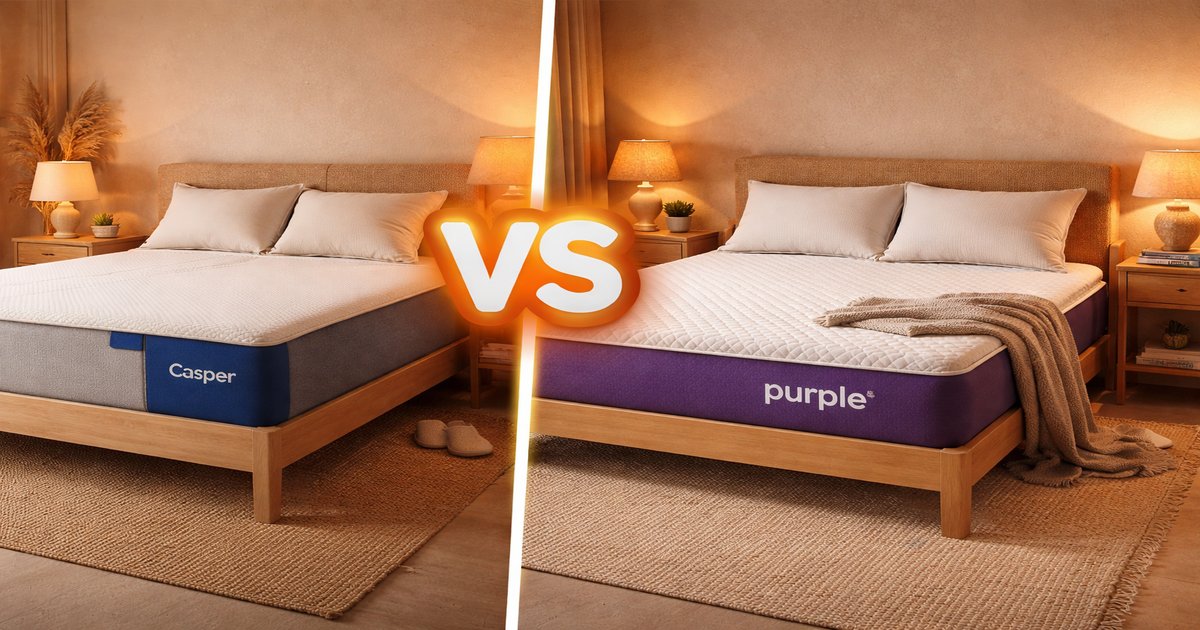
You’re tossing and turning at night, waking up with an aching back, and you know it’s time for a new mattress. But with so many options out there, how do you choose between the Casper and Purple mattresses? Let’s break it down so you can stop counting sheep and start sleeping like a log.
| Specification | Casper | Purple |
|---|---|---|
| Material | Polyurethane Foam | Hyper-Elastic Polymer Grid |
| Firmness | Medium-Firm | Medium |
| Height | 11 inches | 9.25 inches |
| Trial Period | 100 nights | 100 nights |
| Price (Queen) | $1,095 | $1,299 |
| Motion Isolation | ✓ | ✓ |
| Edge Support | ✓ | ✗ |
✅ casper Pros
- Excellent edge support keeps you from sliding off.
- Great motion isolation for couples.
- Medium-firm feel suits a wide range of sleepers.
❌ casper Cons
- Can get warm for hot sleepers.
- Foam layers might sag over time.
✅ purple mattress Pros
- Unique polymer grid promotes airflow and keeps you cool.
- Adaptive support is great for pressure relief.
- Durable materials that last longer.
❌ purple mattress Cons
- Higher price point.
- Edge support is lacking.
Performance and Comfort
The Casper mattress is like that reliable friend who always shows up but can sometimes get a bit too clingy—its foam construction provides solid support and motion isolation but can trap heat, making it less ideal for hot sleepers. The Purple mattress, on the other hand, is your cool friend who keeps things breezy. Its hyper-elastic polymer grid offers excellent airflow, keeping you cooler throughout the night. If you sleep hot or live in a warmer climate, Purple edges out Casper in comfort.
Build Quality and Durability
Casper’s all-foam construction is robust for the first few years but may start to sag, especially if you’re on the heavier side. Purple’s smart grid construction, however, is built to last. Its unique materials resist sagging and maintain their bounce over time. If longevity is your priority, Purple’s design is a notch above Casper’s.
Value for Money
When it comes to pricing, Casper offers a more budget-friendly option without compromising essential features like motion isolation and edge support. Purple, while pricier, provides a unique sleeping experience with its innovative grid and superior cooling capability. If you’re on a tight budget, Casper is the sensible choice. But if you can stretch the wallet a bit, Purple offers value in its longevity and comfort.
Both mattresses come with a 100-night trial, but here’s what they don’t tell you: Casper’s foam layers can start feeling uneven over time, and Purple’s unique grid might take a couple of weeks for your body to adjust. Also, if you sleep near the edge, Purple’s lack of edge support can make you feel like you’re about to roll off.
Our Final Verdict: Which One Should You Buy?
If you’re a hot sleeper who values longevity and innovative design, the Purple mattress should be your go-to. It’s perfect for those who prioritize cool sleep and are willing to invest in a durable product. But if you want reliable support, excellent edge stability, and a more budget-friendly option, Casper is the mattress for you, especially if you don’t mind a bit of warmth.
How does the firmness of each mattress compare?
Casper is medium-firm, ideal for back and stomach sleepers, while Purple leans towards medium, offering a bit more give, which is great for side sleepers.
Are these mattresses suitable for heavier individuals?
While both can handle heavier weights, Purple’s grid design offers better long-term durability and support for heavier users.
Do these mattresses have a chemical smell?
Both mattresses might have a slight odor upon unboxing, but it usually dissipates within a few days. Ensure proper ventilation to speed up the process.