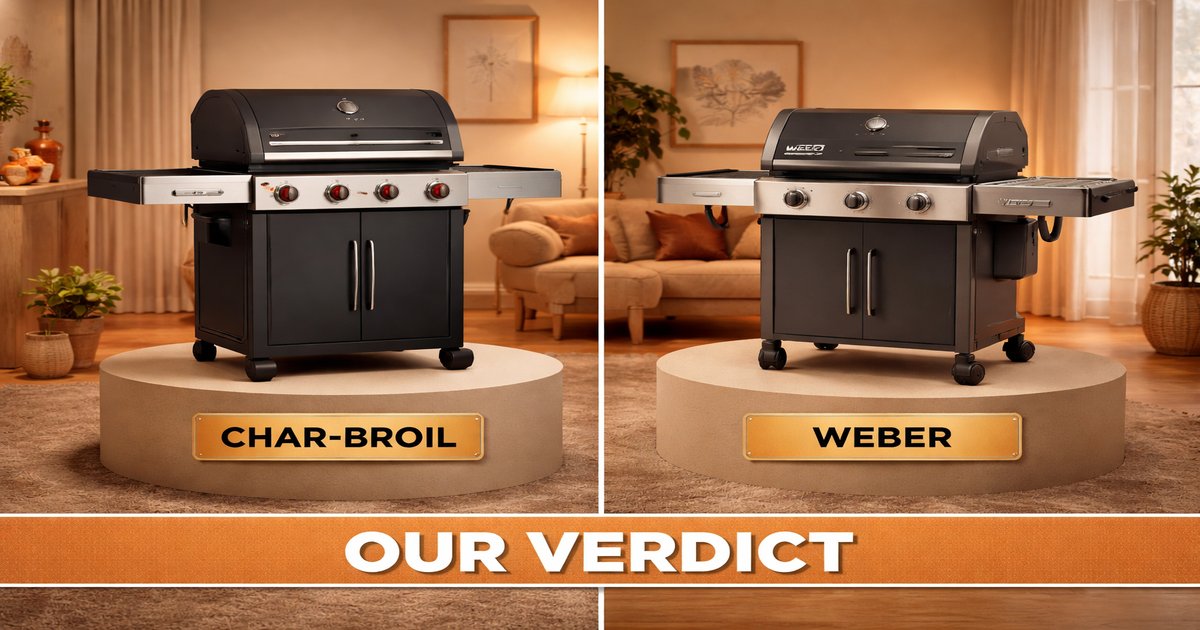
You’re in the market for a new grill, standing in the BBQ aisle overwhelmed by shiny displays. Char Broil and Weber are staring you down, each promising to make your backyard the summer hotspot. But which one truly delivers the sizzle without burning a hole in your wallet?
| Feature | Char Broil | Weber |
|---|---|---|
| Price Range | $150 – $500 | $300 – $1000 |
| Primary Cooking Area (sq in) | 360 – 660 | 450 – 844 |
| Burners | 2 – 5 | 3 – 6 |
| BTU Output | 20,000 – 45,000 | 26,000 – 60,000 |
| Warranty | 1-5 years | 5-10 years |
| Infrared Cooking | ✓ | ✗ |
| Advanced Temperature Control | ✗ | ✓ |
✅ char broil Pros
- More affordable options.
- Infrared cooking technology for even heat.
- Compact models ideal for small spaces.
❌ char broil Cons
- Shorter warranty period.
- Less durable materials.
✅ weber Pros
- Exceptional build quality and durability.
- Advanced temperature control features.
- Excellent customer service and support.
❌ weber Cons
- Higher price point.
- Heavier and less portable.
Grill Performance
When it comes to performance, Weber outshines with its superior temperature control, which is a game-changer if you’re into grilling steaks to perfection. Weber grills offer consistent heat across the cooking surface, perfect for those who demand precision. On the other hand, Char Broil’s infrared technology is a solid option if you’re looking for even cooking without flare-ups, but it might not give you the same level of control over temperature as Weber does.
Build Quality
Weber grills are built like tanks, using high-quality stainless steel and cast iron, ensuring they’ll withstand years of backyard cookouts. If you’re someone who grills frequently and wants a long-term investment, this is your bet. Char Broil, while more budget-friendly, uses lighter materials, making them easier to move but less durable in the long run. If your grill usage is more occasional, Char Broil offers decent longevity for its price.
Value for Money
Char Broil is undeniably the budget king. If you’re just dipping your toes into grilling or need something simple that won’t break the bank, Char Broil provides functional grills with good performance at a fraction of Weber’s cost. Weber, though pricier, offers exceptional value for those willing to pay for premium features and durability. It’s for the dedicated griller who sees cooking as more than just a hobby.
Char Broil grills, while affordable, can sometimes suffer from uneven heating and require more maintenance to keep them in top shape. Weber, despite its high quality, can be a pain to assemble and might require a bit of muscle to move around. Make sure you’re up for the challenge if you go with Weber.
Our Final Verdict: Which One Should You Buy?
If you’re a casual griller on a budget or have a small outdoor space, Char Broil is your friend. It’s affordable, compact, and perfect for those summer BBQs without the commitment. On the flip side, if you’re a grilling enthusiast who values durability and precision, Weber is the grill to invest in. It’s worth every penny for the serious cook.
How long do these grills typically last?
Weber grills can last a decade or more with proper care, thanks to their robust build. Char Broil grills may last 3-5 years, which is decent for the price.
Are replacement parts easy to find?
Weber offers a wide range of easily available replacement parts. Char Broil also provides parts, but availability can vary depending on the model.
Which grill is easier to clean?
Weber grills often include features like grease management systems that simplify cleaning. Char Broil requires a bit more manual effort but isn’t overly complicated.