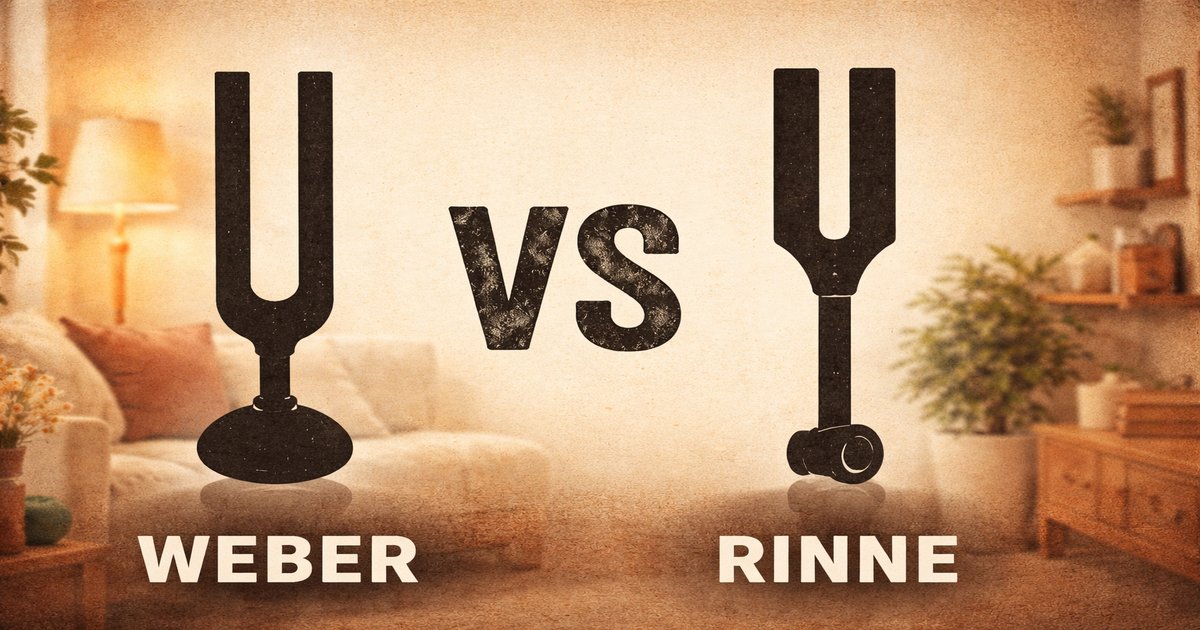
You’re about to ace the audiology exam, but you’re stuck on choosing between the Weber and Rinne tests. Both are classic audiological tests for hearing assessment, but which is the most effective for your needs? Let’s break them down so you can make a confident decision.
| Feature | Weber Test | Rinne Test |
|---|---|---|
| Test Type | Tuning Fork | Tuning Fork |
| Purpose | Detects unilateral conductive hearing loss | Compares air vs. bone conduction |
| Procedure Location | Forehead | Mastoid process and ear canal |
| Frequency Used | 256 Hz or 512 Hz | 256 Hz or 512 Hz |
| Ease of Use | ✓ | ✗ |
| Result Interpretation | Simple | Complex |
✅ weber Pros
- Quick and easy to administer
- Effective for detecting unilateral conductive hearing loss
- Minimal equipment required
❌ weber Cons
- Limited to unilateral hearing issues
- Can be less specific in diagnosing exact problem
✅ rinne test Pros
- Comprehensive assessment of air vs. bone conduction
- More precise in identifying conductive vs. sensorineural loss
- Can be used to confirm Weber test results
❌ rinne test Cons
- More complex to administer
- Requires careful interpretation of results
Performance and Accuracy
The Weber test is your go-to for a quick, straightforward assessment when you suspect unilateral conductive hearing loss. It’s fast, requiring you to place the tuning fork on the forehead and observe which ear perceives the sound better. On the other hand, the Rinne test takes the cake for comprehensive accuracy. It helps differentiate between conductive and sensorineural hearing loss by comparing air conduction to bone conduction. If you want clarity on the type of hearing loss, Rinne is your friend, albeit with a bit more complexity.
Ease of Use and Interpretation
When it comes to ease of use, the Weber test is as simple as it gets. With a quick placement on the forehead, you’re done in seconds, and the results are easy to interpret: sound louder in one ear indicates a type of hearing loss. The Rinne test, however, demands more steps and a keener understanding of auditory pathways. Placing the tuning fork on the mastoid process and then near the ear canal requires precision, and interpreting the results takes some practice. So for newbies, Weber is the gateway, while Rinne is for when you’re ready to dig deeper.
Value for Specific Needs
If your main aim is to quickly screen for potential hearing issues, especially in a busy clinic setting or during a quick check-up, the Weber test offers great value. It’s fast and requires minimal training. However, if you’re diagnosing a patient and need a detailed analysis, the Rinne test provides the depth needed to make informed decisions. It’s more demanding but pays off with a nuanced understanding of the patient’s auditory condition.
Most people don’t realize that the Weber test can sometimes mislead if there’s bilateral hearing loss. The Rinne test, while more informative, can be misinterpreted if you’re inexperienced. Both require practice for accurate results, so don’t expect perfection on your first try.
Our Final Verdict: Which One Should You Buy?
If you’re new to audiology or need a quick, reliable test for unilateral hearing issues, go for the Weber test. It’s a no-brainer for high-volume environments. For experienced practitioners or those needing a thorough analysis of hearing loss, the Rinne test is your tool of choice. It requires more expertise but delivers greater insights, especially in complex cases.
Is the Weber test suitable for bilateral hearing loss?
Not really. The Weber test is designed for unilateral hearing loss and may not provide accurate results for bilateral conditions.
Can I use both tests together?
Absolutely. Using both tests in conjunction can give a fuller picture of a patient’s hearing health and help confirm results.
How often should I practice these tests?
Practice as often as possible to gain proficiency, especially with the Rinne test, which requires precise technique and interpretation.