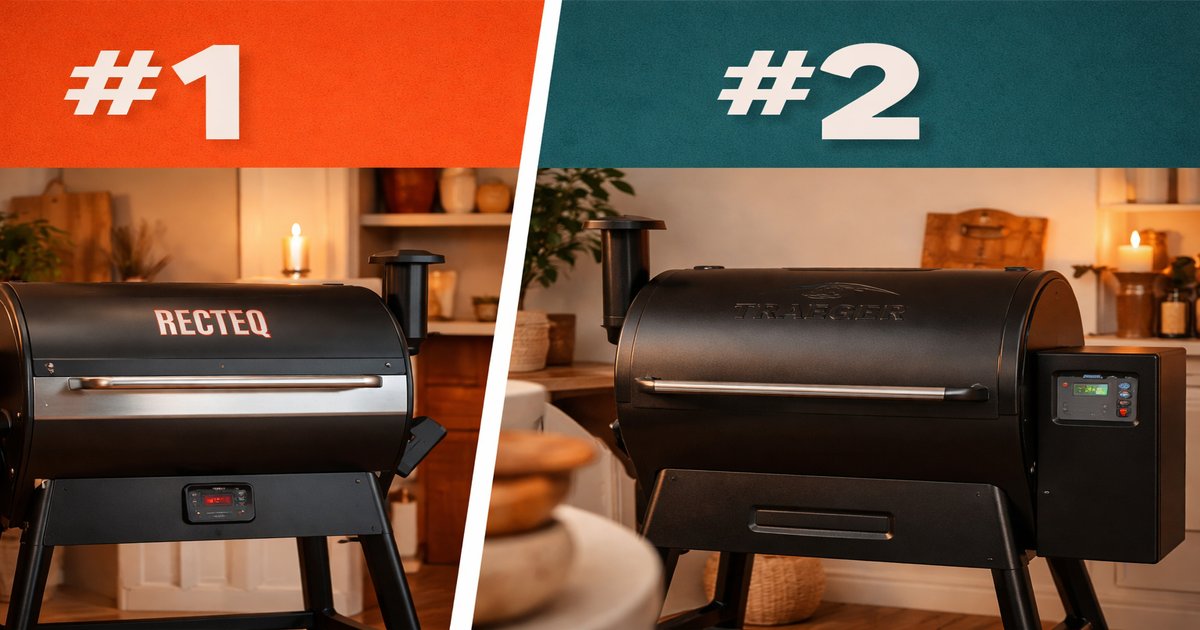
You’re ready to up your grilling game, but the decision between recteq and Traeger has you stumped. Both brands promise to transform your BBQ experience into something legendary, yet they take different roads to get there. Let’s break it down so you can decide which is your best backyard buddy.
| Feature | recteq RT-700 | Traeger Ironwood 885 |
|---|---|---|
| Temperature Range | 180°F – 700°F | 165°F – 500°F |
| Cooking Area | 702 sq. in. | 885 sq. in. |
| WiFi Connectivity | ✓ | ✓ |
| Hopper Capacity | 40 lbs | 20 lbs |
| Material Build | Stainless Steel | Powder Coated Steel |
| Price | $$$ | $$$ |
✅ recteq Pros
- Higher temperature range for better searing capabilities.
- Stainless steel construction offers durability and weather resistance.
- Larger hopper capacity means less frequent refills.
❌ recteq Cons
- Not as spacious cooking area compared to some competitors.
- Heavier and bulkier design makes it less portable.
✅ traeger Pros
- Ample cooking space for larger gatherings.
- Comprehensive app with recipes and grill guides.
- Trusted brand with a solid reputation in pellet grilling.
❌ traeger Cons
- Lower top temperature limits searing potential.
- Smaller hopper capacity requires more frequent pellet refills.
Performance: Temperature Range and Cooking Control
When it comes to cooking performance, recteq takes the lead with its 180°F to 700°F range, making it ideal for everything from slow smoking to high-heat searing. This versatility is perfect if you love experimenting with different cooking styles. Traeger’s range tops out at 500°F, which is fine for most tasks but leaves you wanting when it comes to a perfect steak sear. If top-end heat is your priority, recteq is the clear choice.
Build Quality: Material Matters
Recteq’s use of stainless steel in the RT-700 is a game-changer. It not only looks sleek but also withstands the elements better, making it a long-lasting investment. Traeger, on the other hand, opts for a powder-coated steel construction. It’s durable, but don’t expect it to hold up as well against rust and wear over time, especially if you live in a humid climate. If longevity and ruggedness are on your checklist, recteq wins this round.
Value: Price vs. Features
Both grills sit at a premium price point, but recteq offers more bang for your buck with its high-temperature range and larger hopper capacity. However, Traeger shines with its user-friendly app and extensive recipe library, which can be a boon for beginners. If you’re more concerned with getting the most features for your dollars, recteq edges ahead, but Traeger’s ease of use can’t be discounted.
Both grills have WiFi connectivity, but don’t expect seamless integration every time. Connection drops aren’t uncommon, especially if your router is a fair distance away. Also, while stainless steel is great, it’s not invincible — keep it clean to maintain its shine and longevity.
Our Final Verdict: Which One Should You Buy?
If you’re a grilling enthusiast who craves high heat and durability, recteq RT-700 is your best bet. It’s built for those who see grilling as a serious craft. For the casual griller who values ease of use and extensive cooking guidance, Traeger Ironwood 885 is the way to go. It’s perfect for those who love to entertain without fussing over every detail.
Is there a significant difference in the flavor of food cooked on recteq vs. Traeger?
Both grills offer excellent flavor, but recteq’s higher heat can provide a better sear on meats, which some argue enhances taste.
How often do you need to refill the pellet hopper?
Recteq’s larger hopper requires less frequent refills, especially on longer cooks. Traeger’s smaller hopper might need a top-up for extended sessions.
Are these grills easy to clean?
Both models require regular cleaning. Recteq’s stainless steel is easier to wipe down, but Traeger’s design makes ash removal straightforward.