
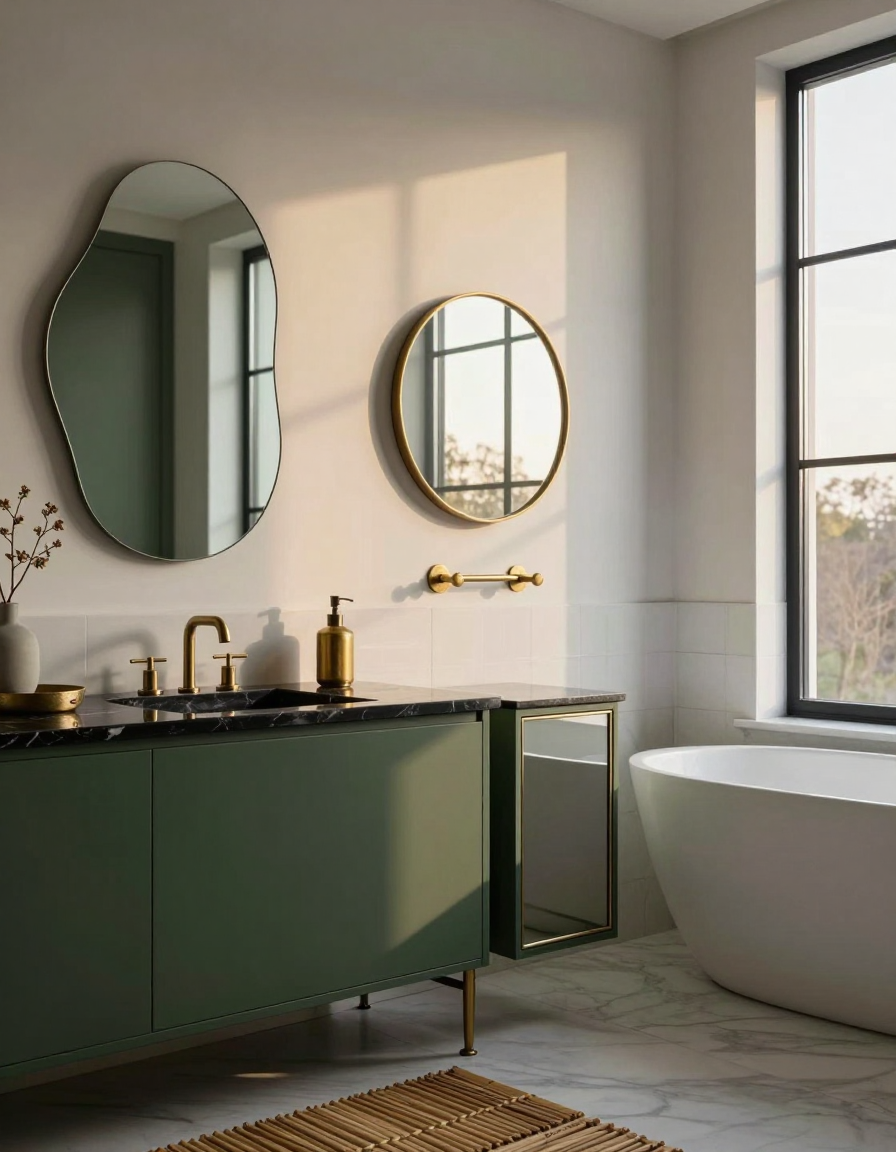
Tired of bathroom mirrors that clash with your eco-conscious lifestyle? Finding minimalist mirror options that are both stylish and sustainable can be challenging. Many mass-produced mirrors rely on unsustainable materials and manufacturing processes. Let’s explore minimalist mirror styles that prioritize both aesthetics and environmental responsibility.
Choosing sustainable mirrors aligns perfectly with minimalist principles by reducing waste and promoting conscious consumption. Selecting pieces that are durable, ethically sourced, and designed for longevity minimizes your environmental impact.
1. Reclaimed Wood Framed Mirrors
Opt for mirrors framed with reclaimed wood. Look for certifications from organizations like the Forest Stewardship Council (FSC) to ensure responsible sourcing. A simple rectangular or round mirror with a natural wood frame adds warmth and character. Price range: Mid-range ($200-$600). Consider a local artisan for custom sizing.
2. Bamboo Framed Mirrors
Bamboo is a rapidly renewable resource, making it an excellent choice for a sustainable bathroom mirror. Its natural texture complements a minimalist aesthetic. Choose a mirror with a water-resistant sealant to protect the bamboo from moisture. Price range: Budget ($80-$300). Seek out brands with transparent sourcing practices.
3. Frameless Mirrors with Eco-Friendly Backing
Frameless mirrors are the epitome of minimalism. Look for mirrors with backing made from recycled materials or those that use low-VOC (volatile organic compounds) adhesives. This reduces the off-gassing of harmful chemicals into your bathroom. Price range: Budget ($50-$250). Consider the thickness of the glass for durability.
4. Upcycled Mirror Projects
Embrace the DIY spirit by upcycling an old mirror. Refurbish a vintage mirror frame with eco-friendly paint or create a new frame using salvaged materials. This is a cost-effective and creative way to add a unique touch to your minimalist bathroom. Price range: Budget ($0-$100) (depending on the cost of materials).
5. Mirrors with LED Backlighting (Energy Efficient)
When selecting a mirror with integrated lighting, prioritize LED bulbs. LEDs are significantly more energy-efficient than traditional incandescent or halogen bulbs. This reduces your energy consumption and lowers your carbon footprint. Price range: Mid-range to Luxury ($300-$1000+). Check for energy star ratings.
6. Mirrors Made with Recycled Glass
Some manufacturers now offer mirrors made with recycled glass. This reduces the demand for new glass production, which is an energy-intensive process. Inquire about the percentage of recycled content when making your purchase. Price range: Mid-range ($250 – $700). Support companies committed to circular economy principles.
Who This Works For: Eco-conscious homeowners, apartment dwellers, and renters looking to minimize their environmental impact without sacrificing style. It’s also suitable for those with allergies or sensitivities to VOCs.