
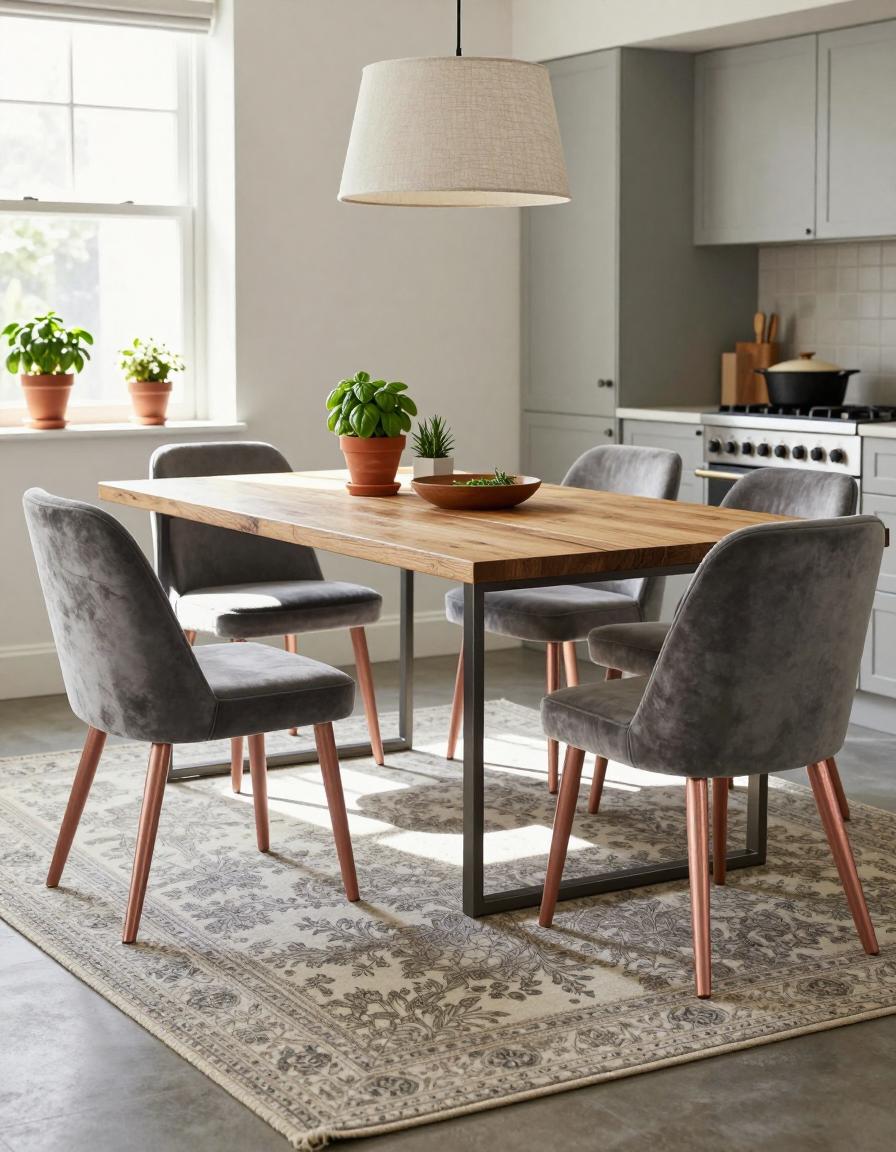
Choosing the right rug for your minimalist dining room can be daunting. A rug is a functional piece and also defines the space. It anchors the dining area and adds a touch of warmth without cluttering the clean, simple aesthetic. It’s about finding the perfect balance between form and function.
In the minimalist aesthetic, every element serves a purpose. The rug isn’t just decoration; it’s a statement of intent. It subtly contributes to the room’s overall harmony. Let’s dive into a step-by-step guide for selecting the right one.
Step 1: Measure Your Space Precisely
Before you even begin browsing, accurately measure the dimensions of your dining area. Aim for a rug that extends at least 24-36 inches beyond the table on all sides. This allows chairs to remain on the rug even when pulled out. For a table that is 60 inches long, ensure your rug is at least 108 inches long. A rug that’s too small will look awkward and disrupt the room’s balance.
Step 2: Choose Low-Pile or Flatweave Rugs
Opt for low-pile or flatweave rugs. These are easier to clean, essential for a dining area where spills are inevitable. Consider materials like wool, jute, or sisal for durability and texture. Avoid shag rugs or overly plush options that contradict the minimalist ethos. Prices for these rugs typically fall in the Budget ($50-$200) to Mid-range ($200-$800) category, depending on size and material.
Step 3: Stick to Neutral Colors and Simple Patterns
Embrace a neutral color palette to maintain the minimalist feel. Think of soft grays, beiges, creams, or even a muted black. If you desire pattern, choose subtle geometric designs or textures that add depth without being overwhelming. Avoid overly ornate or colorful patterns. A simple, textured rug in a neutral shade (like a light gray wool rug) can cost around $350-$600.
Step 4: Consider Natural and Sustainable Materials
Align with the minimalist values of sustainability by selecting rugs made from natural and renewable materials. Jute, sisal, or even recycled materials are excellent choices. These not only look beautiful but also contribute to a more eco-friendly lifestyle. Expect to pay in the Mid-range ($200-$800) to Luxury ($800+) category for high-quality, sustainably sourced rugs.
Step 5: Prioritize Durability and Cleanability
Given the high traffic and potential for spills in a dining room, durability and cleanability are crucial. Wool rugs are naturally stain-resistant and easy to clean. Jute and sisal are also durable, but they may require more specialized cleaning. Consider rugs with stain-resistant treatments for added protection. Look for warranties or guarantees that reflect the rug’s expected lifespan.
Who This Works For: This rug selection guide works well for renters (easy to move and replace), families with young children (easy to clean), and pet owners (durable and resistant to wear and tear). Those seeking sustainable options will also find this approach very fitting.