
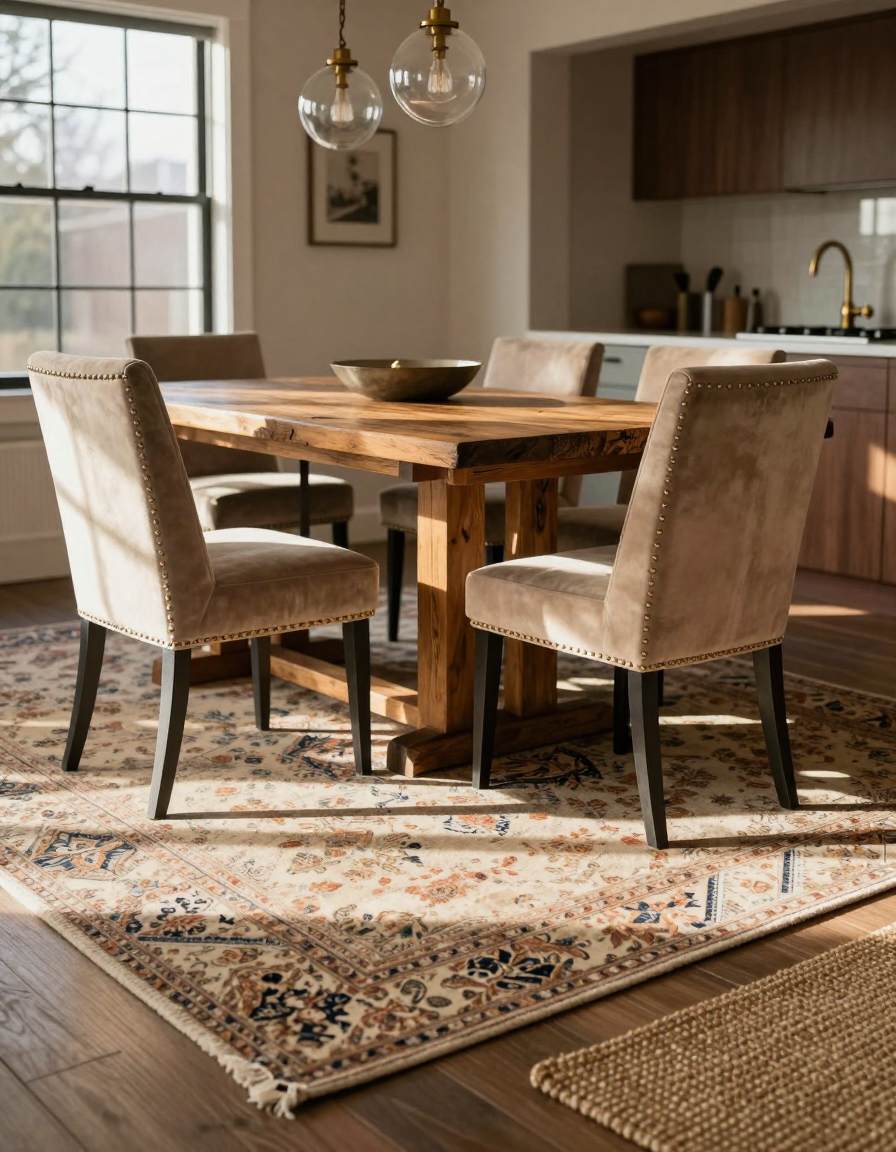
Choosing the right rug for your rustic dining room can feel like navigating a minefield. A wrong selection can clash with the overall aesthetic, disrupt the room’s flow, and even become a maintenance nightmare. In a rustic setting, where natural textures and raw materials reign supreme, the rug plays a pivotal role in grounding the space and adding warmth. Let’s avoid these common missteps.
1. Ignoring Rug Size
Far too often, rugs are too small for the dining area. The rug should extend at least 24 inches beyond the table’s edge to accommodate chairs being pulled out. A rug that’s too small makes the room feel disjointed. Measure your dining area carefully, accounting for the table’s size and chair movement. For a 6-person rectangular table, aim for at least an 8×10 rug. Prices range from Budget ($150-$400) to Mid-range ($400-$1000) for suitable sizes.
2. Choosing the Wrong Material
Delicate materials like silk or viscose are impractical for a dining room where spills are inevitable. Opt for durable, stain-resistant options like wool, jute, or synthetic blends. Wool offers warmth and resilience (Mid-range to Luxury), while jute provides a natural, textured look (Budget to Mid-range). Synthetic blends are often the most affordable and easiest to clean (Budget).
3. Overlooking the Pile Height
A high-pile rug can make it difficult to move chairs around, especially on hard floors. A low-pile or flatweave rug is generally a better choice for a dining area. These rugs are easier to clean and won’t obstruct chair movement. Consider a Berber rug (Mid-range) or a flatweave Kilim (Budget to Mid-range) for a rustic touch.
4. Mismatching the Color Palette
A rug that clashes with the existing color scheme can throw off the entire room’s balance. Choose a rug with colors that complement the dining table, chairs, and wall color. For a rustic space, consider earthy tones like browns, greens, grays, or muted reds. A rug with a subtle pattern can add visual interest without overwhelming the space.
5. Neglecting Underlayment
Skipping a rug pad is a common mistake that can lead to rug slippage, premature wear, and damage to your flooring. A quality rug pad provides cushioning, prevents the rug from sliding, and protects the floor underneath. Choose a rug pad specifically designed for hard floors or carpets, depending on your flooring type (Budget: $20-$50).
6. Ignoring Pattern Scale
The scale of the rug pattern should be proportional to the size of the dining room. A large, bold pattern can overwhelm a small space, while a small, intricate pattern might get lost in a larger room. Choose a pattern that complements the overall scale of the room and other decorative elements.
7. Forgetting About Cleaning
Dining room rugs are prone to spills and stains. Choose a rug that is easy to clean and maintain. Wool rugs are naturally stain-resistant, but jute rugs can be more challenging to clean. Consider a rug with a stain-resistant treatment or a darker color to help conceal stains. Regular vacuuming and spot cleaning are essential for maintaining the rug’s appearance.
Who This Works For: Families with children, pet owners, or anyone who enjoys frequent entertaining will benefit most from durable, stain-resistant rug selections. Renters might prefer more affordable and easily replaceable options.