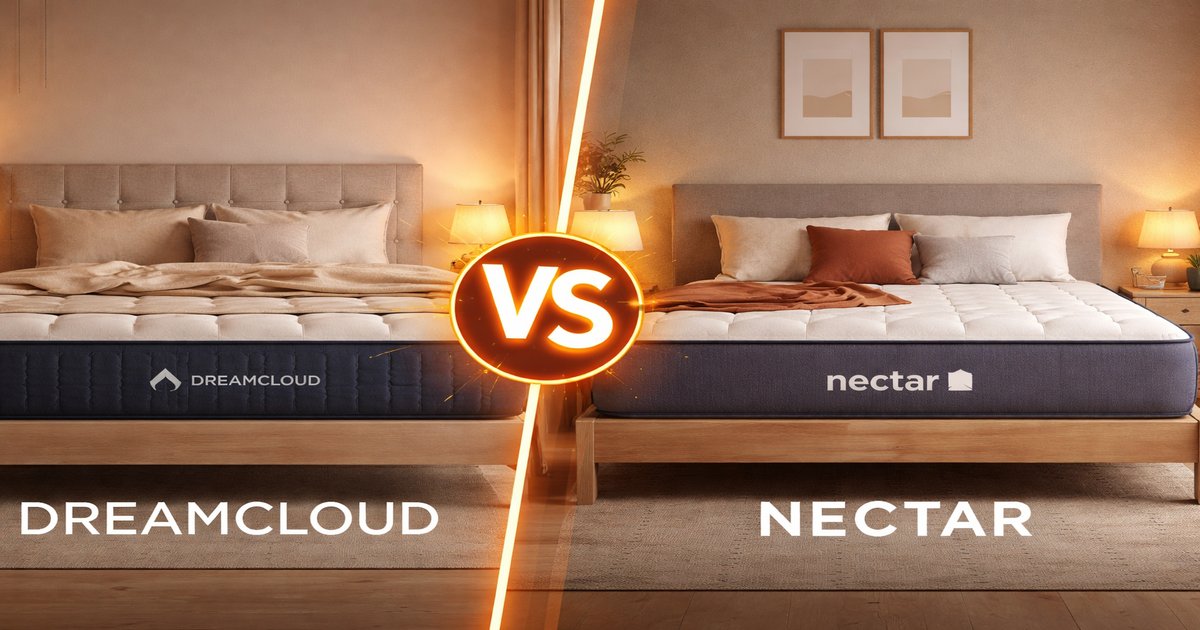
Choosing the right mattress can feel like navigating a maze of marketing jargon and endless options. You’re not just looking for a place to crash at night; you want a bed that feels like a dreamy cloud or one that hugs you like a caring friend. Let’s break down the DreamCloud and Nectar mattresses so you can sleep easy knowing you made the right choice.
| Specification | DreamCloud Mattress | Nectar Mattress |
|---|---|---|
| Type | Hybrid | Memory Foam |
| Firmness | Medium-Firm | Medium-Firm |
| Trial Period | 365 Nights | 365 Nights |
| Warranty | Lifetime | Forever |
| Height | 14 inches | 12 inches |
| Edge Support | ✓ | ✗ |
✅ dreamcloud Pros
- Exceptional edge support for sitting and sleeping near the edge.
- Hybrid design offers a balance of support and contouring.
- Great motion isolation for couples.
❌ dreamcloud Cons
- Heavier and harder to move around.
- Higher price point than some other options.
✅ nectar mattress Pros
- Outstanding value for money.
- Excellent pressure relief for side sleepers.
- Easy setup and lighter to maneuver.
❌ nectar mattress Cons
- Weaker edge support, which can be an issue if you like sleeping near the edge.
- Possible heat retention due to all-foam construction.
Performance
DreamCloud’s hybrid construction excels in delivering a blend of support and bounce that suits a range of sleeping positions. If you’re a combo sleeper who shifts around, this mattress gives you the responsiveness you need without disturbing your partner. On the flip side, Nectar is a memory foam stalwart, providing that classic “sink-in” feeling. It cradles side sleepers perfectly, reducing pressure on the shoulders and hips. Both mattresses are medium-firm, but Nectar’s foam can feel softer, thanks to its contouring properties.
Build Quality
When it comes to build quality, DreamCloud’s hybrid design combines gel-infused memory foam with a coil system for durability. The materials used are robust and designed to last, which is reflected in its heavier build. Nectar, while lighter, doesn’t skimp on quality. Its multiple layers of foam are well-constructed, though it might lag slightly in longevity compared to DreamCloud’s hybrid structure. For those who prioritize a mattress that can withstand the test of time, DreamCloud holds the edge.
Value
Nectar shines in the value department. It’s hard to beat its price point given the quality of sleep it delivers. It’s a great option if you’re budget-conscious but don’t want to sacrifice comfort. DreamCloud, although pricier, justifies its cost with enhanced features like edge support and a more luxurious feel. If you’re looking to invest in a mattress that offers a hotel-like sleeping experience, the extra cost might be worth it for you.
While both brands tout long trial periods, keep in mind the logistics of returning a mattress can be a hassle. They aren’t as straightforward as simply shipping back a small item. Also, if you’re prone to overheating, Nectar’s memory foam might not be your best friend during summer months.
Our Final Verdict: Which One Should You Buy?
DreamCloud is your go-to if you crave a luxurious, durable mattress with solid edge support and you don’t mind shelling out a bit more cash. Ideal for couples who want minimal motion transfer. Nectar is perfect for budget-conscious individuals who love that classic memory foam feel and don’t need strong edge support. It’s especially great for side sleepers who want excellent pressure relief without breaking the bank.
Is the DreamCloud mattress suitable for back pain?
Yes, its hybrid design provides balanced support and contouring, which can help alleviate back pain.
Does the Nectar mattress sleep hot?
While some users report slight heat retention, its gel memory foam layer helps mitigate excessive warmth.
How long does it take to break in these mattresses?
Both mattresses generally take around 30 days to fully break in, though initial comfort can be felt almost immediately.