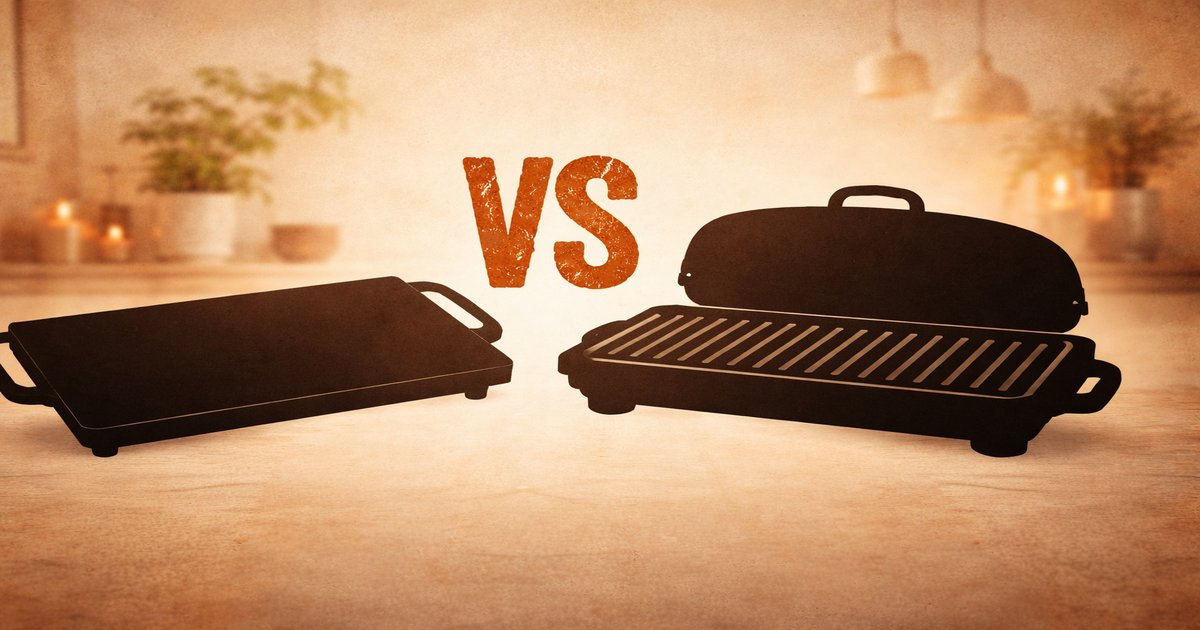
Picture this: It’s a sunny Saturday morning. You’re deciding between flipping pancakes on a flat, sizzling surface or grilling juicy burgers with perfect sear marks. Whether you’re an indoor breakfast champion or a backyard BBQ boss, the choice between a griddle and a grill can shape your culinary adventures.
| Feature | Griddle | Grill |
|---|---|---|
| Cooking Surface | Flat, smooth | Grates with gaps |
| Heat Distribution | Even | Varies |
| Smoke Production | ✗ | ✓ |
| Versatility | High | Moderate |
| Ease of Cleaning | Moderate | Challenging |
| Portability | Low | High |
✅ griddle Pros
- Even heat distribution perfect for pancakes, eggs, and more.
- High versatility, suitable for various cuisines.
- Great for indoor cooking without smoke.
❌ griddle Cons
- Lacks the char and smoky flavor of a grill.
- Typically less portable and requires more space.
- Cleaning can be cumbersome with large surface area.
✅ grill Pros
- Provides authentic smoky flavor and grill marks.
- Highly portable, great for outdoor adventures.
- Perfect for cooking meats and vegetables with high heat.
❌ grill Cons
- Uneven heat distribution can lead to inconsistent results.
- Cleaning grill grates is often a hassle.
- Smoke production limits indoor use.
Performance
When it comes to performance, griddles give you a smooth ride with even heat distribution across the entire cooking surface. This makes them ideal for delicate foods like pancakes or eggs. If you’re aiming for precise control with minimal hot spots, a griddle is your go-to. On the other hand, grills excel in delivering that classic char and smoky flavor, perfect for steaks and burgers. However, be prepared for some uneven cooking due to the nature of grate designs, which can lead to a bit of a learning curve.
Build Quality and Design
Griddles are generally built with robust, flat surfaces that can handle a variety of foods without them falling through. The design is straightforward, making them durable over long periods. Grills, however, often have more intricate designs due to the presence of grates and sometimes lids, which can be prone to rust and wear. If you’re looking for something that requires less maintenance in terms of build, the griddle wins. But for those who appreciate intricate craftsmanship, many grills offer a more aesthetically pleasing and functional design.
Value and Versatility
Value isn’t just about the price tag; it’s about what you get for the money. Griddles offer high versatility, allowing you to cook anything from breakfast to dinner on a single surface. This adaptability can save you money in the long run by reducing the need for multiple appliances. Grills, while less versatile, bring a unique flavor profile that is hard to replicate. If you’re a flavor fanatic, the grill’s value lies in its ability to transform simple ingredients into gourmet experiences.
Griddles may seem like the perfect indoor cooking solution, but they can be bulky and hard to store. Meanwhile, grills can be a fire hazard if not used properly, especially in enclosed spaces. Also, don’t underestimate the mess a grill can make with grease and ash if you don’t have a proper setup.
Our Final Verdict: Which One Should You Buy?
If you’re someone who loves the versatility of cooking everything from breakfast to dinner with ease, and have the space to accommodate it, go for a griddle. It’s perfect for the home chef who values even cooking and minimal smoke indoors. On the flip side, if you’re an outdoor enthusiast or a weekend BBQ warrior who craves the authentic grill flavor and portability, the grill is your best bet. It’s for those who revel in the art of grilling and don’t mind a bit of outdoor cleanup.
Can I use a griddle on a regular stove?
Yes, many griddles are designed to sit over your stovetop burners. Just ensure your stove can accommodate the griddle’s size for even heating.
How do I prevent sticking on the grill?
Preheat your grill and oil the grates before cooking. This helps create a non-stick surface and improves flavor.
Which is more durable, a griddle or a grill?
Griddles are generally more durable due to their simpler design and fewer moving parts. Grills require more maintenance to prevent rust and wear over time.