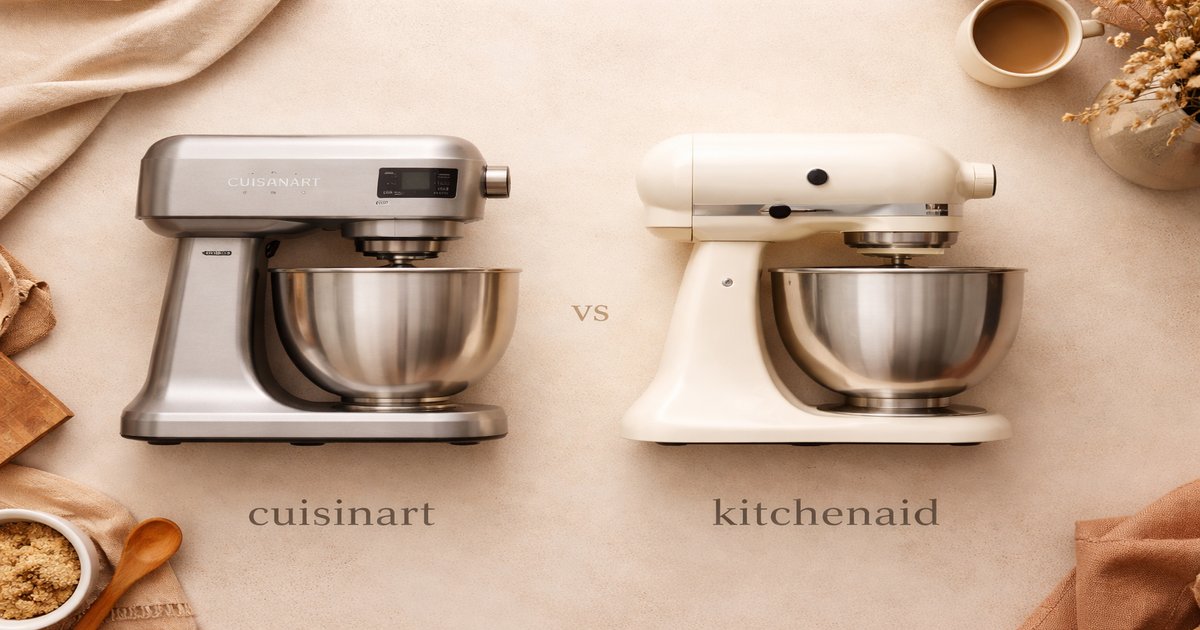
You’re in the market for a new stand mixer and the battle has boiled down to Cuisinart versus KitchenAid. Whether you’re kneading dough for homemade bread or whipping up a batch of cookies, the right mixer can make all the difference. Let’s dive into the specs and see which one should earn a spot on your counter.
| Feature | Cuisinart | KitchenAid |
|---|---|---|
| Motor Power | 500 Watts | 325 Watts |
| Bowl Capacity | 5.5 Quarts | 5 Quarts |
| Speed Settings | 12 | 10 |
| Attachments Included | 3 | 3 |
| Warranty | 3 Years | 1 Year |
| Color Options | 4 | 20+ |
| Price Range | $$ | $$$ |
✅ cuisinart Pros
- More powerful motor at 500 Watts, ideal for heavy doughs.
- Larger bowl capacity, perfect for big batches.
- Offers a longer warranty period of 3 years.
❌ cuisinart Cons
- Fewer color options, limiting aesthetic customization.
- Heavier and bulkier, taking up more counter space.
✅ kitchenaid Pros
- Widely recognized brand with a reputation for reliability.
- Vast array of color options to match any kitchen decor.
- Compatible with numerous attachments for versatile use.
❌ kitchenaid Cons
- Lower motor power, which may struggle with dense mixes.
- Shorter warranty period of just 1 year.
Performance
When it comes to performance, Cuisinart takes the cake with its 500-watt motor, effortlessly handling dense doughs and larger batches. If you’re planning to bake regularly or tackle tough recipes, this extra power is a game-changer. KitchenAid, despite its lower 325-watt motor, still performs admirably for most standard tasks. It’s the preferred choice for those who value brand reputation and have lighter mixing needs.
Build Quality
Cuisinart mixers are robust and slightly heavier, translating to stability when in use. However, their bulk could be a downside if your kitchen space is limited. KitchenAid mixers, though lighter, are known for their durable, timeless design. The array of color options adds a touch of personalization, making it a stylish centerpiece on any countertop.
Value for Money
Cuisinart offers more bang for your buck with a stronger motor and a longer warranty, crucial if you plan on using it often. KitchenAid, while more expensive, provides a broader range of attachment compatibility, enhancing its versatility. If you’re looking for a mixer that can grow with your culinary skills, KitchenAid’s adaptability might justify the higher price tag.
Here’s the scoop: Cuisinart might be a bit of a beast on your counter, but it won’t let you down when the going gets tough. KitchenAid is the darling of the mixer world, but remember, its lower wattage might mean more time spent mixing those heavy doughs. Both have their quirks, so consider your kitchen space and cooking habits before swiping that card.
Our Final Verdict: Which One Should You Buy?
If you’re a serious home baker who often deals with large batches or heavy doughs, go for the Cuisinart. Its power and capacity make it ideal for high-demand use. If you value aesthetics, attachment versatility, and plan to mostly handle lighter tasks, the KitchenAid is your best bet. It’s perfect for those who want a reliable, stylish mixer that complements their kitchen decor.
Is the Cuisinart mixer louder than the KitchenAid?
Yes, the Cuisinart can be slightly louder due to its more powerful motor, but it’s not significantly noisier than the KitchenAid.
Can I use KitchenAid attachments on a Cuisinart mixer?
No, KitchenAid and Cuisinart mixers have different attachment mechanisms, so they are not cross-compatible.
How long can I expect these mixers to last?
With proper care, both mixers can serve you well for over a decade. KitchenAid has a longstanding reputation for durability, while Cuisinart’s longer warranty offers added peace of mind.