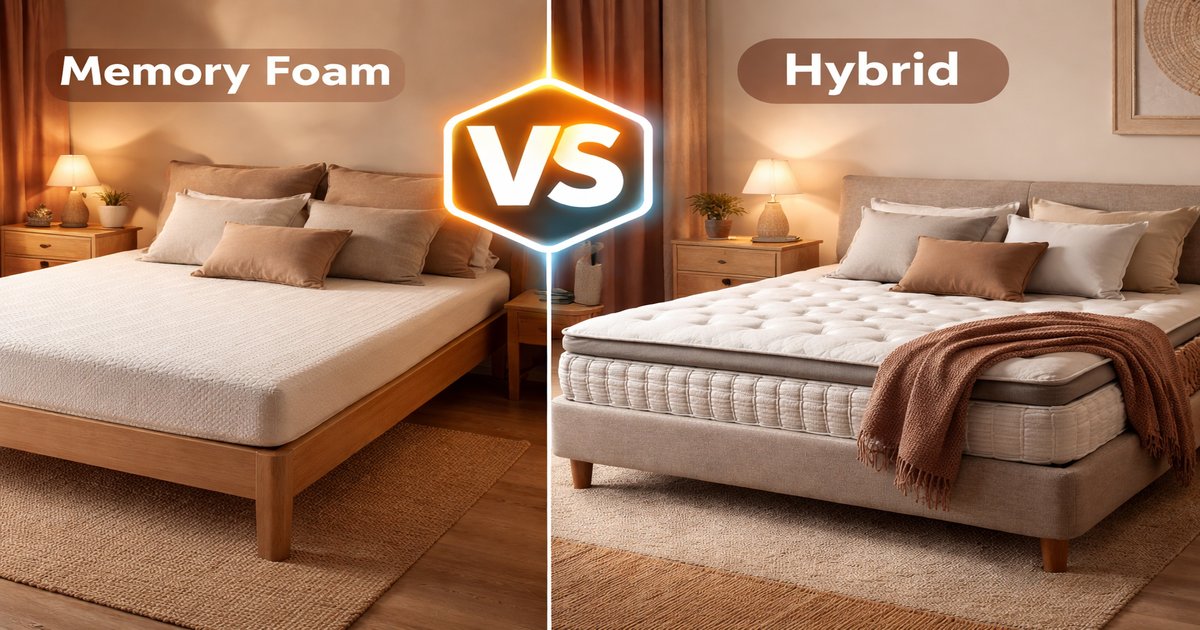
You’re tossing and turning, wondering if a memory foam or hybrid mattress will finally grant you that elusive perfect night’s sleep. Whether you crave the soft embrace of foam or the responsive support of coils, let’s dissect these popular mattress types to find out which one suits you best.
| Feature | Memory Foam | Hybrid |
|---|---|---|
| Support | Medium to High | High |
| Motion Isolation | ✓ | ✓ |
| Temperature Regulation | Medium | High |
| Durability | 7-10 years | 10-15 years |
| Price Range | $400 – $2000 | $800 – $3000 |
| Edge Support | ✗ | ✓ |
✅ memory foam Pros
- Excellent motion isolation for restless partners.
- Conforms closely to the body’s contours, offering great pressure relief.
- Generally lower price point.
❌ memory foam Cons
- Tends to retain heat, which can be uncomfortable for hot sleepers.
- Can feel too soft for those who prefer a firmer surface.
✅ hybrid Pros
- Combines the support of coils with the comfort of foam for a balanced feel.
- Better edge support, making it easier to use the entire mattress surface.
- Generally better at temperature regulation.
❌ hybrid Cons
- Higher price point compared to memory foam.
- Heavier and more cumbersome to move.
Performance
Memory foam mattresses excel in motion isolation, making them ideal if your partner tosses and turns. You’ll hardly notice their movements. However, they tend to trap heat, which can be a dealbreaker if you’re a hot sleeper. Hybrids, with their combination of coils and foam, offer a cooler sleep experience. The coils provide airflow, keeping the mattress breathable. Both types offer good pressure relief, but hybrids have an edge with their supportive coils, especially for back pain sufferers.
Build Quality
Memory foam mattresses are generally simpler, comprising multiple layers of foam with varying densities. While they provide excellent body contouring, they can lack the structural support found in hybrids. Hybrid mattresses integrate the best of both worlds—foam for comfort and coils for support. This construction not only enhances durability but also offers better edge support, preventing that annoying roll-off feeling.
Value
If you’re on a tight budget, memory foam can offer excellent value without breaking the bank. They’re widely available and often come with generous warranties. Hybrids, while pricier, justify their cost with longevity and added features like superior edge and temperature support. If you can stretch your budget, the long-term benefits of a hybrid might outweigh the initial investment.
Memory foam is great until you realize it can sag over time, especially if you’re on the heavier side. Hybrids, while durable, can be a headache to set up and move due to their weight. Don’t forget, both types will have a break-in period, so give them some time before forming a final opinion.
Our Final Verdict: Which One Should You Buy?
If you’re budget-conscious and prioritize motion isolation, memory foam is your go-to. It’s perfect for couples and those who enjoy a plush feel. On the other hand, if you need robust support, sleep hot, or simply want a mattress that will last longer, consider investing in a hybrid. It’s ideal for those who want the best of both worlds—support and comfort.
Do hybrid mattresses last longer than memory foam?
Yes, generally hybrids last longer due to their coil support system, which adds durability and structure.
Are memory foam mattresses good for back pain?
They can be, thanks to their contouring abilities. However, if you need more support, a hybrid might be better.
Can you flip a memory foam or hybrid mattress?
Most are designed to be one-sided, so flipping isn’t recommended. Rotation every few months can help with wear.