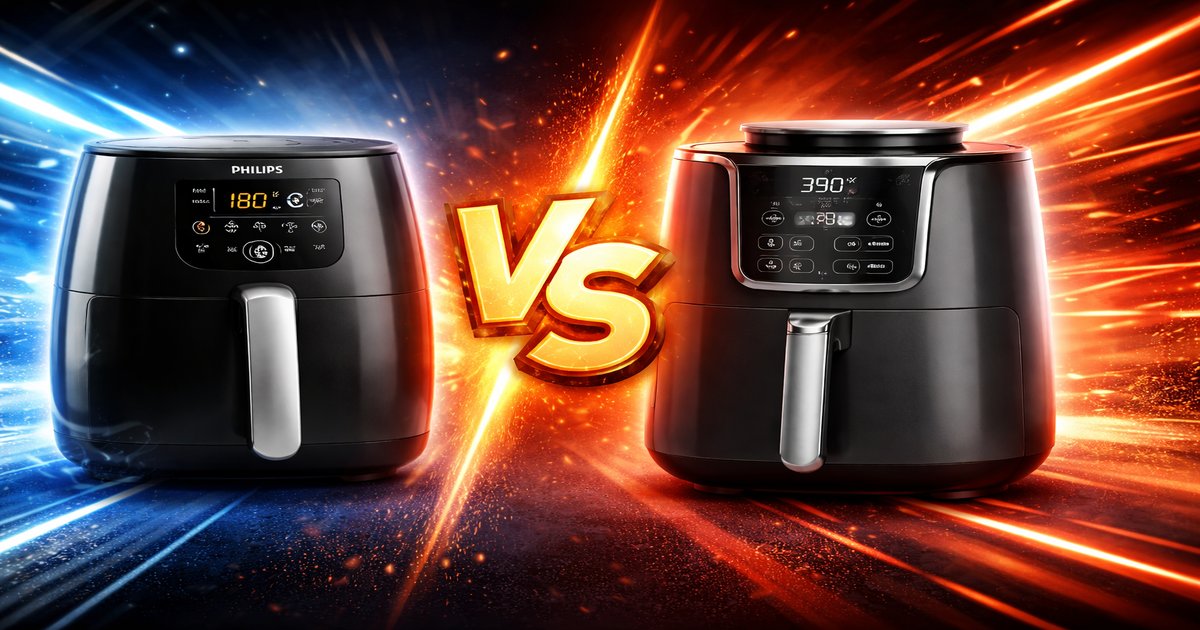
So, you’re fed up with your oven’s slow cooking times and inconsistent results, and you’re ready to dive into the world of air fryers. But with so many options, how do you decide between heavyweights like Philips and Ninja? Let’s break down these two popular options to see which one deserves a spot on your countertop.
| Feature | Philips Air Fryer | Ninja Air Fryer |
|---|---|---|
| Capacity | 2.75 qt | 4 qt |
| Temperature Range | 180°F – 390°F | 105°F – 400°F |
| Preset Functions | ✓ | ✓ |
| Digital Display | ✓ | ✓ |
| Dishwasher Safe Parts | ✓ | ✓ |
| Weight | 15.08 lbs | 10.58 lbs |
| Price | Higher | Moderate |
✅ philips Pros
- Excellent build quality with durable materials.
- Advanced heat circulation technology for even cooking.
- Compact design fits easily on most countertops.
❌ philips Cons
- Higher price point compared to competitors.
- Smaller capacity limits batch cooking.
✅ ninja air fryer Pros
- Larger capacity ideal for families or meal prep.
- Wider temperature range offers more versatility.
- Lightweight design makes it easy to move and store.
❌ ninja air fryer Cons
- Plastic construction feels less premium.
- Can be noisier during operation.
Performance: Cooking Results and Speed
Philips air fryers are known for their superior heat circulation technology, which ensures food is evenly cooked with a crisp finish. However, the Ninja doesn’t fall far behind, offering similar results but with a slightly wider temperature range. If you’re looking to dehydrate snacks or cook at lower temps, Ninja has the slight edge. Both models heat up quickly, but Philips’ smaller capacity means it can be faster for single servings or small meals.
Build Quality and Design
The Philips air fryer boasts a solid and durable construction, with materials that feel premium and long-lasting. It’s a little heavier, which contributes to its stable feel on the countertop. In contrast, the Ninja, while lighter and easier to move around, doesn’t quite match Philips in terms of build quality. However, its design is sleek and modern, which might appeal to those looking for a stylish kitchen gadget.
Value for Money
If you’re budget-conscious, the Ninja offers great value with its larger capacity and versatile temperature range. It’s perfect for those who need to cook larger quantities without breaking the bank. Philips, though pricier, justifies its cost with advanced technology and durable build, making it ideal for users who prioritize longevity and consistent performance over capacity.
While both brands tout dishwasher-safe parts, Philips’ smaller parts can sometimes trap grease, needing a little extra elbow grease to clean. Ninja’s noise level during operation might be a dealbreaker if you’re sensitive to sound. Also, Philips’ higher price doesn’t automatically mean better performance for all cooking scenarios.
Our Final Verdict: Which One Should You Buy?
If you’re a small household or a solo cook who values quality and consistent results, the Philips air fryer is your top pick. For larger families or meal preppers who need more capacity and versatility without overspending, the Ninja air fryer is the way to go. Each shines in its own right, so choose based on your specific cooking needs.
Can both air fryers fit in a small kitchen?
Yes, both models have compact designs, but Philips is slightly smaller, making it a better fit for tight spaces.
How do they handle frozen food?
Both air fryers excel at cooking frozen foods to a crisp finish, though Ninja’s larger capacity can handle more at once.
Is there a significant difference in longevity?
Philips generally offers better longevity due to its superior build quality, but both are reliable with proper care.