You’re in the kitchen, hungry, and craving a perfectly grilled cheese sandwich or maybe a stack of pancakes. You’ve got the ingredients, but not the right tool. Do you go for the trusty skillet or the spacious griddle? Let’s break down which one earns a spot on your stove.
| Feature | Skillet | Griddle |
|---|---|---|
| Cooking Surface Area | Typically 8-12 inches | Typically 16-22 inches |
| Material Options | Cast iron, non-stick, stainless steel | Cast iron, non-stick |
| Heat Distribution | ✓ Even | ✓ Even |
| Oven Safe | ✓ Yes | ✗ No |
| Ease of Cleaning | Varies by material | Often dishwasher-safe |
| Price Range | $20-$200 | $30-$300 |
✅ skillet Pros
- Great for searing and browning.
- Versatile for stovetop and oven use.
- Perfect for smaller meals or single servings.
❌ skillet Cons
- Limited cooking space.
- Can be heavy and hard to handle.
✅ griddle Pros
- Ample space for cooking multiple items at once.
- Even heat distribution over a large area.
- Ideal for pancakes, bacon, and large meals.
❌ griddle Cons
- Not typically oven-safe.
- Requires more storage space.
Performance in the Kitchen
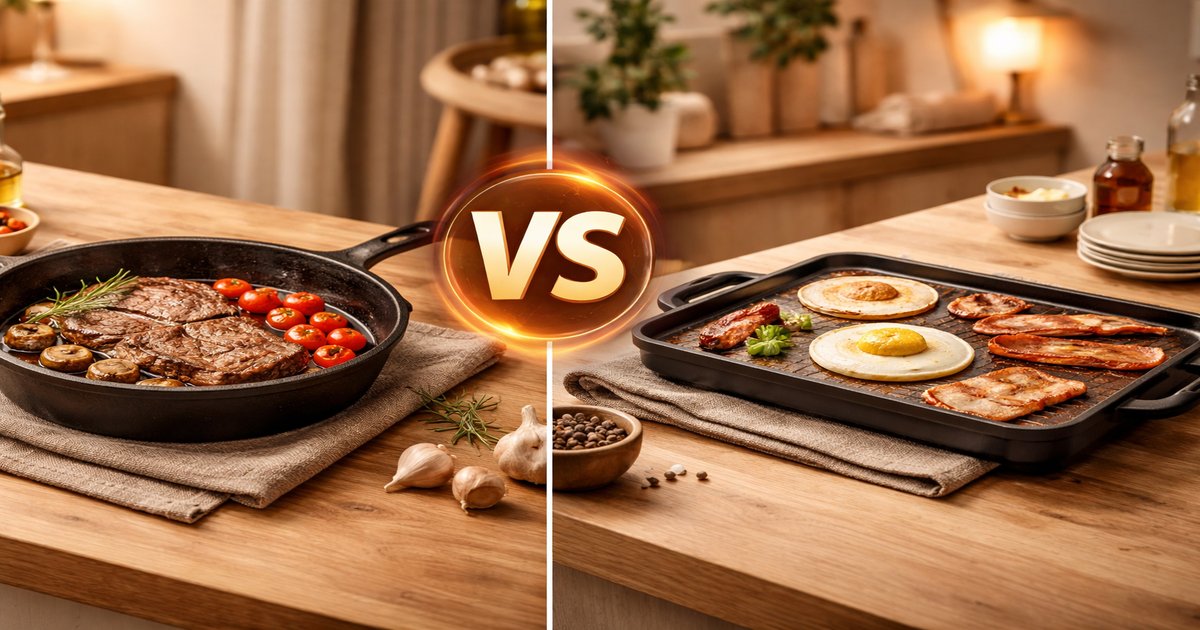
When you’re cooking up a quick breakfast, the griddle shines with its expansive cooking surface, letting you sizzle bacon, eggs, and pancakes simultaneously. It’s a real time-saver for family brunches. Skillets, on the other hand, excel in tasks requiring higher heat and better control, like searing a steak or sautéing vegetables. If you’re all about precision and versatility, the skillet is your go-to, especially for tasks that transition from stovetop to oven.
Build Quality and Material
Skillets come in a variety of materials, each with its own perks. Cast iron skillets are nearly indestructible and excellent for heat retention, but they require seasoning and can be cumbersome. Non-stick skillets offer easy cleanup but are prone to wear over time. Griddles, often non-stick or cast iron, deliver good heat distribution across their spacious surface, ideal for uniform cooking. However, the larger size means they can be awkward to store and maintain.
Value for Money
If your cooking needs are basic or you cook for one or two people, a skillet offers versatility and a reasonable price point. For large families or frequent entertainers, a griddle’s higher upfront cost pays off in efficiency and convenience. Consider how often you cook and what you like to make. A skillet might be all you need for daily meals, but a griddle could be the investment that elevates your weekend breakfasts.
Skillets are fantastic for one-pan meals, but their weight can be a burden, especially in cast iron. Griddles give you real estate, but they’re not the choice for high-heat searing or roasting in the oven. And while non-stick surfaces are easy to clean, remember they can scratch and degrade over time.
Our Final Verdict: Which One Should You Buy?
For the home cook who enjoys versatility and doesn’t mind a bit of maintenance, go with a skillet. It’s perfect for a range of cooking methods and fits well in small kitchens. If you often cook for a crowd or love breakfast foods, the griddle is your best friend. It offers the space you need and simplifies cooking multiple items simultaneously.
Can I use a griddle on an induction cooktop?
Yes, but ensure the griddle is induction-compatible. Check for a flat bottom and magnetic material.
How do I maintain a cast iron skillet?
Keep it seasoned by applying a thin layer of oil after each use, and avoid soap. Dry it immediately to prevent rust.
Are non-stick coatings safe?
Modern non-stick coatings are generally safe, but avoid overheating them and use utensils that won’t scratch the surface.