
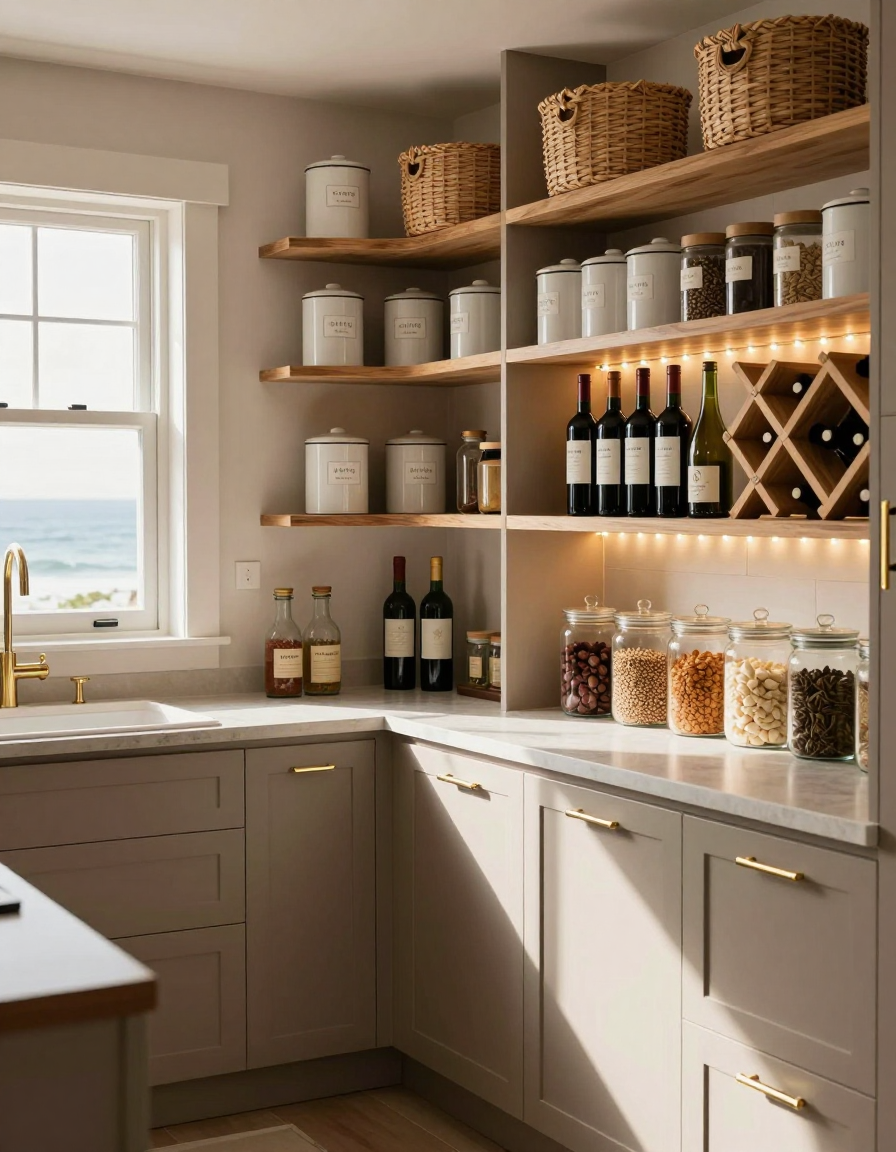
Tired of a cluttered pantry that clashes with your breezy coastal aesthetic? Achieving a beautifully organized and environmentally conscious coastal kitchen pantry is easier than you think. Let’s dive into sustainable and stylish solutions that respect both your home and the ocean.
Coastal design celebrates natural materials and a relaxed atmosphere. By prioritizing eco-friendly choices in your pantry organization, you’re not only creating a more functional space but also embracing a responsible lifestyle that resonates with the coastal spirit.
1. Ditch the Plastic: Embrace Glass and Bamboo Containers
Swap out plastic containers for reusable glass jars and bamboo canisters. Glass is easily recyclable, showcases the vibrant colors of your ingredients, and prevents leaching of harmful chemicals. Bamboo is a rapidly renewable resource, offering a lightweight and durable alternative. Look for airtight glass containers from brands like Weck or Ball, ranging from Budget ($20-$75) for a starter set to Mid-range ($75-$200) for larger, more specialized collections. For bamboo, check out Eco Kitchenware or Bamboozle.
2. Seagrass Baskets: Natural Storage
Incorporate woven seagrass baskets for storing dry goods like potatoes, onions, and snacks. Seagrass is a sustainable and biodegradable material that adds a touch of natural texture to your pantry. Choose baskets in varying sizes to accommodate different items. A set of three seagrass baskets can range from Budget ($30-$80) depending on the size and quality. Consider brands like The Container Store or World Market.
3. Upcycled Wood Shelving
Opt for shelving made from reclaimed or upcycled wood. This reduces the demand for new lumber and adds a unique, rustic charm to your coastal pantry. Search local salvage yards or woodworking shops for reclaimed wood. The cost will vary significantly depending on the type and amount of wood needed, ranging from Budget ($50-$150) for smaller DIY projects to Mid-range ($200-$500) for custom-built shelving units.
4. Linen Produce Bags: Say Goodbye to Plastic
Replace plastic produce bags with reusable linen bags. Linen is a durable and breathable fabric that helps keep your fruits and vegetables fresh for longer. These bags can be easily washed and reused, reducing plastic waste. A set of linen produce bags can be found for Budget ($15-$30) on sites like Etsy or through zero-waste stores.
5. Sustainable Labeling: Chalkboard Paint and Plantable Seed Paper
Use chalkboard paint or plantable seed paper tags to label your containers. Chalkboard paint allows you to easily change labels as needed, while plantable seed paper adds a touch of whimsy and reduces paper waste. A can of chalkboard paint costs approximately Budget ($10-$20). Plantable seed paper tags can be found online for a similar price.
6. LED Lighting with a Coastal Vibe
Replace incandescent or fluorescent pantry lights with energy-efficient LED lighting. Choose fixtures with a coastal-inspired design, such as a simple pendant light with a woven shade. LED bulbs consume significantly less energy and last much longer. A coastal-style LED pendant light can range from Mid-range ($50-$150) to Luxury ($200+) depending on the design and materials.
7. Donate Unwanted Items Responsibly
Before organizing, declutter! Donate unwanted food items to local food banks or compost food scraps. This reduces food waste and supports your community. Check with your local food bank for donation guidelines.
Who This Works For: This sustainable coastal kitchen pantry organization strategy works well for environmentally conscious homeowners, renters looking for eco-friendly swaps, and families wanting to reduce their carbon footprint. It’s also perfect for those who appreciate a minimalist, natural aesthetic.