
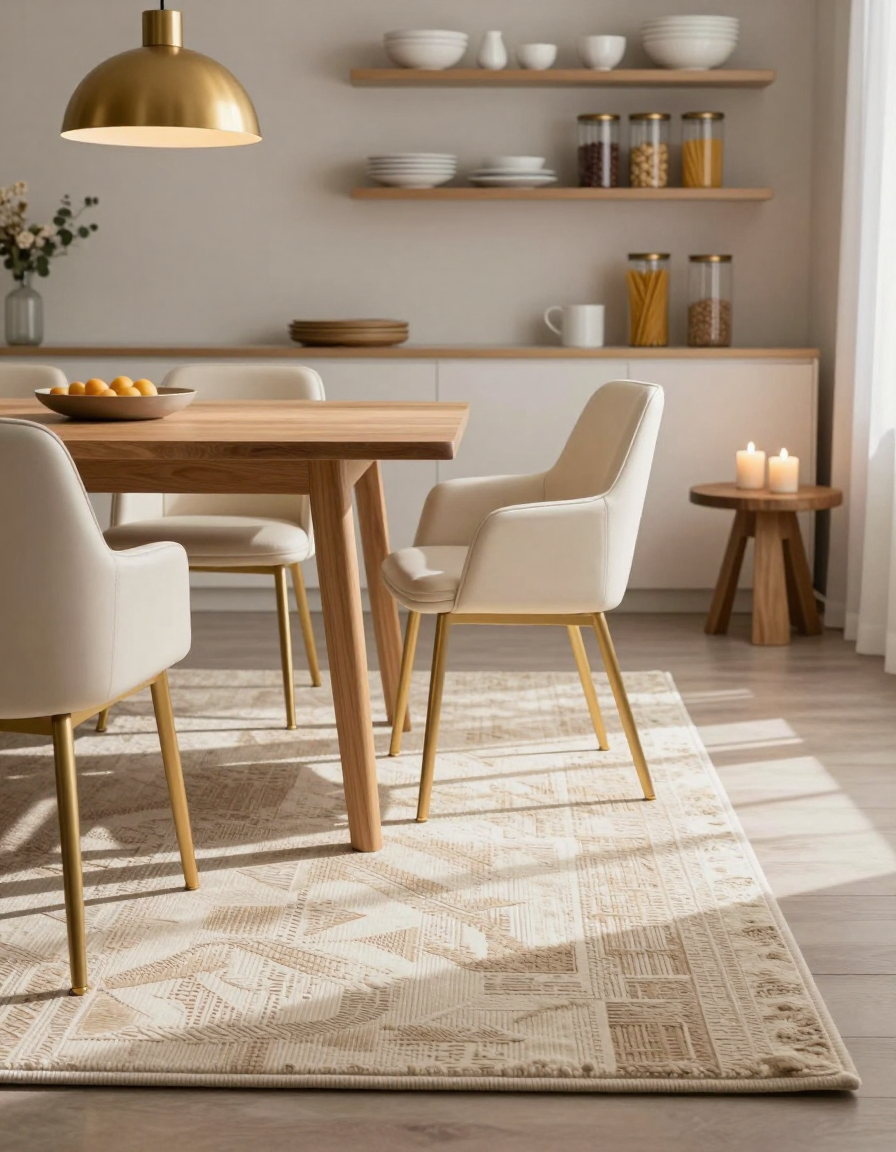
Choosing a rug for your modern dining room involves more than just aesthetics. In today’s world, sustainability is paramount. A mindful Modern Dining Room Rug Selection contributes to a healthier home and planet, aligning with the clean, conscious values of modern design.
1. Opt for Natural Fibers
Prioritize rugs made from natural, renewable fibers such as wool, jute, sisal, cotton, or bamboo. These materials are biodegradable and often require less processing than synthetics. Look for certifications like OEKO-TEX Standard 100 to ensure they’re free from harmful chemicals. Price ranges vary: Jute (Budget: $100-$400), Wool (Mid-Range: $400-$1200), Sisal (Mid-Range: $300-$900), Organic Cotton (Mid-Range: $350-$1000).
2. Consider Recycled Materials
Explore rugs crafted from recycled materials like PET (recycled plastic bottles) or recycled cotton. These options repurpose waste, reducing landfill burden and energy consumption. Recycled PET rugs offer durability and stain resistance, making them ideal for dining areas. Budget ($150-$500), Mid-range ($500-$1000).
3. Seek Out Low-VOC Dyes and Backings
Conventional rug dyes and backings can release volatile organic compounds (VOCs) into your home, impacting air quality. Choose rugs with natural or low-VOC dyes and backings made from natural latex or recycled materials. Check for certifications like Green Label Plus. This is crucial for maintaining the clean air of a modern home.
4. Support Fair Trade Practices
Look for rugs sourced from fair trade organizations. This ensures that artisans receive fair wages and work in safe conditions, promoting ethical production and community development. Look for rugs with the Fairtrade International label.
5. Embrace Minimalism and Durability
Select a rug with a simple, timeless design that will complement your modern dining room for years to come. Durability is key. A well-made rug from natural or recycled materials is a sustainable investment that reduces the need for frequent replacements. Minimalist designs prevent the rug from becoming outdated.
6. Consider the Rug’s End of Life
Think about what will happen to your rug when it’s no longer usable. Choose materials that can be recycled or composted. Wool, jute, and sisal are biodegradable options that can decompose naturally, minimizing environmental impact. Avoid rugs that are bonded to plastic or rubber, as these are difficult to recycle.
7. Buy Local and Support Artisans
Sourcing rugs from local artisans reduces transportation emissions and supports small businesses. Consider commissioning a custom rug made from sustainable materials. This allows you to control the entire production process and ensure that your rug aligns with your eco-friendly values. Luxury ($1000+).
Who This Works For: Families, eco-conscious homeowners, individuals with allergies, and anyone looking to create a healthier and more sustainable living space.