
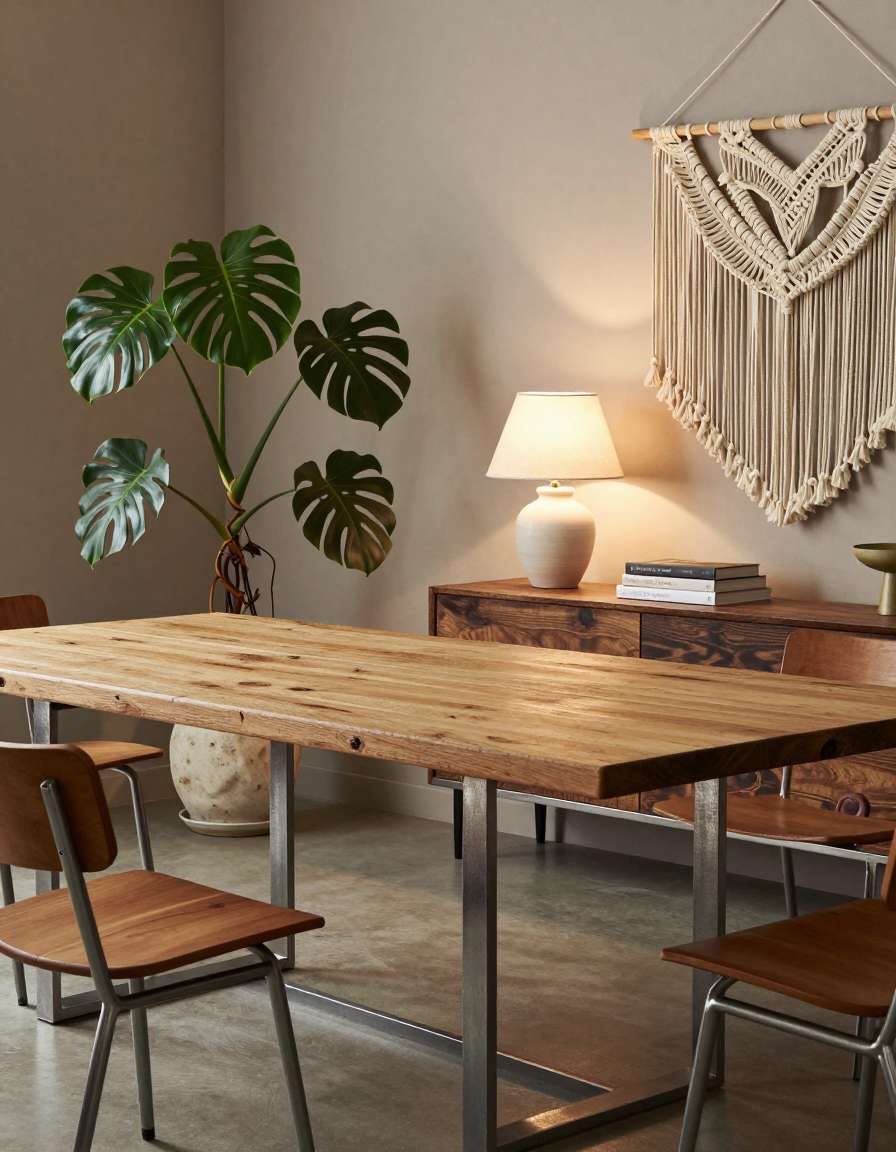
Want to inject that raw, edgy industrial vibe into your dining space? It all starts with the table. Choosing the right industrial dining room table isn’t just about aesthetics; it’s about creating a functional and statement-making centerpiece. A well-chosen table sets the tone for the entire room, echoing the industrial design’s focus on durability, functionality, and raw materials.
1. Assess Your Space and Needs
Before diving into styles, measure your dining area. A good rule of thumb is to leave at least 36 inches between the table and walls for comfortable movement. Consider the number of people you typically host. A rectangular table is ideal for larger groups, while a round or square table works well in smaller spaces. This foundational step is critical to ensure the aesthetic is both suitable and functional.
2. Choose Your Primary Material: Wood vs. Metal
Industrial dining tables often feature a combination of wood and metal. For wood, think reclaimed wood, butcher block, or solid hardwoods like oak or maple. Prices range from Budget ($200-$500) for basic wood tops to Luxury ($1000+) for premium materials like live-edge slabs. Metal bases can be wrought iron, steel, or even repurposed pipes. A metal base offers durability and complements the rustic wood.
3. Select a Table Base Style: Pedestal, Trestle, or Legs
The table base significantly impacts the overall look. A pedestal base offers more legroom and a cleaner aesthetic, while a trestle base provides a classic industrial feel. Leg styles vary from simple straight legs to more intricate designs with exposed bolts and welding. Consider a heavy-duty steel leg for a more robust appearance. Expect to pay Mid-range ($300-$800) for a well-constructed base.
4. Incorporate Distressed Details
Embrace imperfections! Look for tables with distressed wood finishes, visible knots, or intentionally rough edges. Patina on metal accents adds character and authenticity. Think about adding a dark wax to the wood to enhance the grain and give it a more weathered look. You can often DIY this step for Budget prices ($50-$100) using readily available products.
5. Consider Shape and Size: Rectangle, Round, or Square
A rectangular table is a classic choice for larger dining rooms, easily accommodating multiple guests. Round tables promote conversation and work well in smaller spaces. Square tables are a versatile option for apartments or smaller dining nooks. A good size for a family of four is around 48-60 inches in diameter for a round table, or 36-48 inches square.
6. Add Finishing Touches: Chairs and Accessories
Pair your industrial dining table with complementary chairs. Metal chairs with wooden seats, upholstered chairs with metal frames, or even vintage-inspired Tolix chairs are great options. Keep the table uncluttered with a simple centerpiece, such as a metal bowl filled with fruit or a single industrial-style vase. Budget around $100-$300 per chair.
7. Seal and Protect Your Investment
Protect your wood tabletop with a durable sealant or varnish. This will prevent stains, scratches, and water damage. Choose a matte or satin finish to maintain the industrial aesthetic. Consider a polyurethane coating for high-traffic areas. This is a relatively inexpensive step (Budget: $30-$75) that will extend the life of your table.
Who This Works For: This transformation guide works well for homeowners, renters, and apartment dwellers looking to add a touch of industrial charm to their dining space. It’s particularly suited for those who appreciate the blend of rustic and modern elements.
AI-generated imagery, AI-assisted content, human-reviewed.