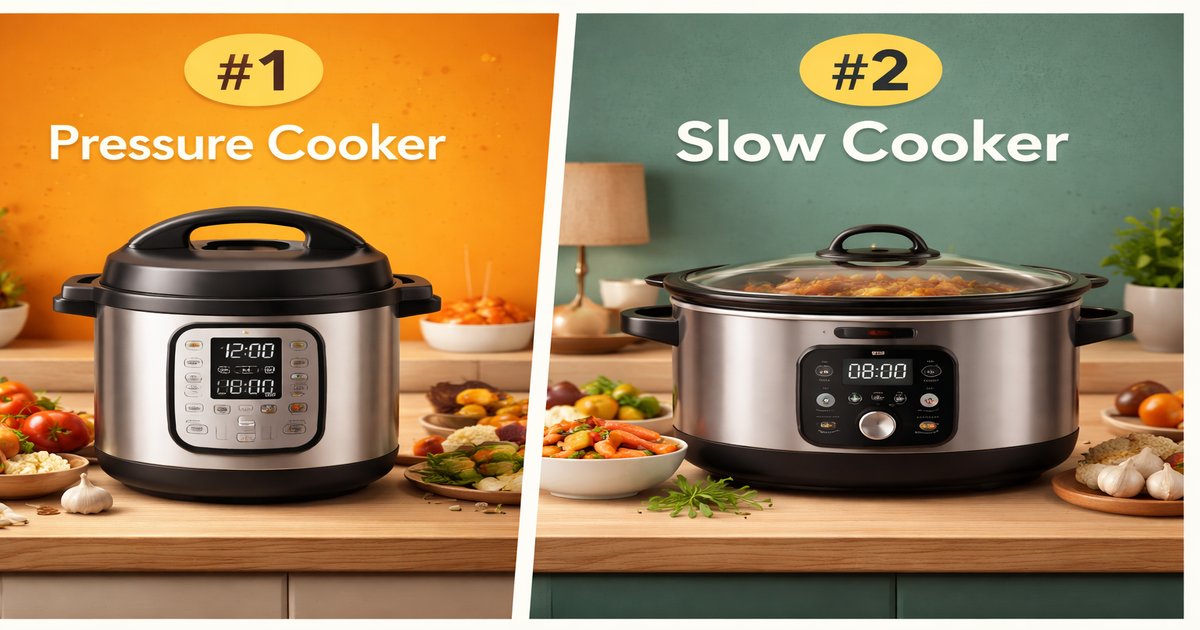
You’ve finally decided to up your meal prep game, but you’re torn between a pressure cooker and a slow cooker. Each promises to make your life easier, but which one truly deserves a spot on your countertop? Let’s break down the battle of the cookers so you can make the best choice for your kitchen and lifestyle.
| Feature | Pressure Cooker | Slow Cooker |
|---|---|---|
| Cooking Time | 30 min – 1 hr | 4 – 10 hrs |
| Energy Efficiency | ✓ | ✗ |
| Versatility | High | Moderate |
| Ease of Use | Moderate | High |
| Flavor Infusion | ✗ | ✓ |
| Price Range | $60 – $200 | $25 – $100 |
✅ pressure cooker Pros
- Significantly reduces cooking time.
- Retains more nutrients in food.
- Highly versatile for different recipes.
❌ pressure cooker Cons
- Steeper learning curve.
- Can be noisy.
- Initial cost is higher.
✅ slow cooker Pros
- Simple to use with a set-and-forget approach.
- Great for flavor infusion over long periods.
- More affordable and energy-efficient for long cooks.
❌ slow cooker Cons
- Takes much longer to cook meals.
- Limited in cooking method versatility.
- Not ideal for last-minute meal prep.
Performance
Pressure cookers shine in the performance department. They can whip up a pot roast in under an hour, which is a godsend on busy weeknights. On the flip side, slow cookers ask for your patience but reward you with deeply infused flavors. If you’re someone who plans meals in advance, the slow cooker can be your best friend, allowing you to come home to a ready meal after a long day. However, if you often find yourself needing to get dinner on the table quickly, the pressure cooker wins hands down.
Build Quality
Pressure cookers, especially electric models like the Instant Pot, are generally built with durable, high-quality stainless steel. This makes them robust but also contributes to their higher price tag. Slow cookers are typically simpler in their construction, often featuring ceramic pots and plastic lids. While they might not look as sleek or modern, they get the job done without breaking the bank. If you value longevity and are willing to invest upfront, go for the pressure cooker.
Value
When it comes to value, it depends on what you prioritize. If speed and versatility are crucial, the higher price of a pressure cooker pays off over time, especially if you like experimenting with different cuisines. If you’re looking for something that’s cost-effective and provides excellent flavor with minimal effort, the slow cooker is a worthy investment. Its lower price point and energy efficiency during long cooking times make it an economical choice for those who love hearty, slow-cooked meals.
Pressure cookers can be intimidating, especially if you’re new to them. Many recipes require some trial and error before you nail the cooking times. Slow cookers, while easy to use, can leave your food a bit too mushy if you’re not careful. Neither is perfect, but understanding these quirks can help you make the most out of whichever appliance you choose.
Our Final Verdict: Which One Should You Buy?
If you’re always on the go and need meals fast, the pressure cooker is your best bet. It’s perfect for busy professionals or families who need to cut down on cooking time without sacrificing meal variety. If you love the idea of setting dinner in the morning and having it ready by evening with rich, developed flavors, the slow cooker is the way to go. It’s ideal for anyone who enjoys home-cooked meals but doesn’t want to be tied to the kitchen all day.
Can I cook rice in both the pressure cooker and slow cooker?
Yes, but the pressure cooker is faster and yields fluffier rice. The slow cooker can cook rice but it’s best for recipes that combine rice with other ingredients.
Are these appliances safe to use?
Both are safe if used correctly. Pressure cookers have safety valves and locking lids to prevent accidents, while slow cookers operate at lower temperatures, minimizing risk.
How long do these appliances typically last?
With proper care, a pressure cooker can last over 5 years, while a slow cooker can serve you well for about 3-5 years depending on usage.